
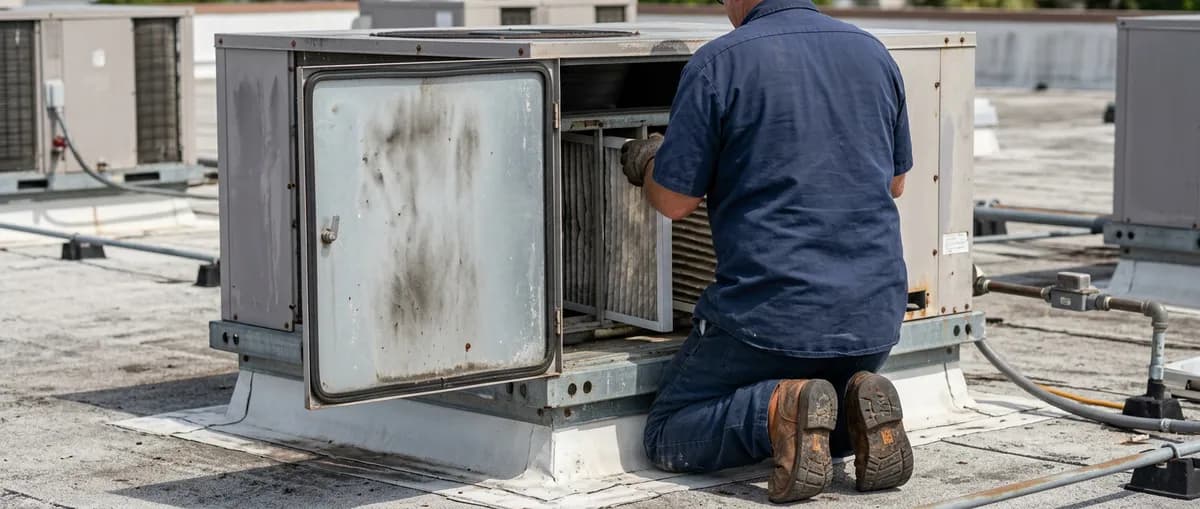
Commercial HVAC Preventive Maintenance Agreements
Blue Works builds preventive maintenance programs for commercial HVAC equipment throughout Orlando and Central Florida. We inspect, service, test, and document the systems that keep your facility operating, including rooftop units, split systems, ventilation equipment, controls, condensate systems, and related mechanical components.
Scheduled maintenance gives our technicians the opportunity to identify worn parts, restricted airflow, electrical deterioration, drainage problems, refrigerant issues, and declining equipment performance before they create a larger interruption.
Whether you manage one commercial building or a portfolio of locations, we can develop a service schedule based on your equipment, operating hours, facility requirements, and tolerance for downtime.
FL Lic. #CMC1251435· Licensed and Insured
Request a Maintenance Assessment
Tell us about your facility, equipment, and current maintenance needs. Our commercial HVAC team will review the information and contact you to discuss the property, service frequency, equipment condition, and next steps.
Commercial service requests are typically reviewed within two business hours.
By submitting this form, you agree to our Terms and Conditions and Privacy Policy.
Commercial Maintenance Requires Consistency, Documentation, and Technical Follow-Through
A commercial maintenance agreement should give the person responsible for the property a clearer understanding of equipment condition, developing repair needs, and future replacement exposure. Our technicians inspect the equipment, complete the scheduled service, record their findings, and identify conditions that require attention. For facilities with several units or locations, that documentation also creates a usable equipment history. As a result, your team can make better decisions about repairs, service priorities, capital planning, and equipment replacement.
Licensed Florida Mechanical Contractor
Blue Works performs commercial HVAC service under Florida license CMC1251435.
Licensed and Insured
Our commercial HVAC work is completed with the licensing and insurance coverage required for professional facility service.
Commercial Equipment Experience
We maintain rooftop units, packaged systems, split systems, ventilation equipment, controls, drainage components, and other commercial HVAC systems.
Documented Service Visits
Our technicians record equipment condition, completed maintenance, developing concerns, and recommended repairs after each scheduled visit.
Multi-Unit and Multi-Site Programs
We can organize maintenance for individual properties, facilities with several systems, and commercial portfolios with multiple locations.
24/7 Emergency Availability
When equipment fails between scheduled visits, our commercial service team is available for urgent HVAC problems.
Serving property managers, facility teams, building owners, retail operators, industrial facilities, offices, restaurants, healthcare properties, schools, campuses, and multi-site portfolios.
Reduce Breakdowns and Build a Clearer Equipment Plan
Commercial HVAC equipment can continue operating while belts wear, coils collect debris, electrical connections deteriorate, drains begin to restrict, and motors draw more current than expected. Those conditions may not shut the system down immediately, but they can reduce capacity, increase operating cost, and contribute to a failure during peak demand.
During scheduled maintenance, our technicians inspect the components that affect cooling, heating, airflow, ventilation, electrical performance, drainage, and controls. When we identify a developing problem, we document the condition and explain the recommended work before it becomes a larger repair.
Identifying these conditions early gives your facility time to plan the repair, order parts, coordinate access, and schedule the work around building operations.
Common conditions maintenance can identify
- Worn or loose belts
- Motor and bearing wear
- Dirty condenser and evaporator coils
- Restricted filters and reduced airflow
- Loose or overheated electrical connections
- Worn contactors, relays, and capacitors
- Abnormal voltage or amperage
- Refrigerant performance concerns
- Restricted condensate drains
- Damaged drain pans or failed float switches
- Economizer and damper problems
- Sensor, thermostat, and control issues
- Cabinet, coil, or electrical corrosion
- Repeated equipment faults
- Declining cooling or heating capacity
When a Commercial Maintenance Agreement Makes Sense
A scheduled maintenance program is useful when HVAC reliability affects tenants, employees, customers, inventory, production, or normal business operations. It also helps facilities with several units maintain a consistent service history and prioritize equipment that is approaching the end of its useful life.
A maintenance agreement may be appropriate when:
- Unplanned HVAC downtime disrupts building operations
- The property has several rooftop or split systems
- Equipment runs through long cooling seasons
- The same units require repeated service
- Energy use is increasing without a clear cause
- Equipment warranties require documented maintenance
- Facility records are incomplete or inconsistent
- Repair costs need to be planned and budgeted
- Several properties need one coordinated service program
- Aging equipment needs to be tracked for replacement planning
- Ventilation and outdoor air equipment require routine inspection
- The facility needs documented service reports
What Our Commercial HVAC Maintenance Includes
The maintenance scope should match the equipment, facility use, operating schedule, and service frequency. During each visit, our technicians complete the assigned inspection and maintenance tasks, document equipment condition, and identify repairs that should be addressed.
Equipment Inspection and Operating Review
We inspect the equipment while it is operating and review the conditions that affect cooling, heating, airflow, ventilation, and system reliability.
Airflow, Filters, Belts, and Coils
Airflow restrictions and dirty heat-transfer surfaces can reduce system capacity and increase equipment runtime. We inspect and service the components that move air through the system.
Electrical Components and Controls
Commercial HVAC equipment depends on electrical components that cycle frequently under heavy operating conditions. We inspect the connections, controls, and components that start, stop, protect, and regulate the equipment.
Refrigerant and Cooling Performance
We evaluate the refrigeration circuit and cooling performance to identify conditions that may be reducing capacity or placing additional stress on the equipment. Refrigerant repairs and charging are recommended and priced when required.
Condensate and Humidity Management
Florida commercial systems can produce significant condensate during long cooling cycles. Restricted drains, damaged pans, failed pumps, and inoperative float switches can lead to water damage and equipment shutdown.
Ventilation, Economizers, and Heating Components
Where applicable, we inspect the equipment responsible for outdoor air, ventilation, building pressure, and heating operation.
Documented Findings After Each Visit
After scheduled service is complete, your facility contact should have a clear record of what our technicians inspected, what maintenance was performed, and what conditions require attention.
For facilities with multiple units, consistent reporting creates an equipment history that helps our team identify recurring problems and track changes over time. That information can support annual budgeting, repair approvals, warranty documentation, and capital replacement planning.
- Our reporting can include:
- Equipment identification
- Service date
- Completed maintenance tasks
- Equipment condition
- Technician findings
- Photos where useful
- Measured operating information
- Developing repair concerns
- Recommended corrective work
- Priority level
- Equipment replacement considerations
When Maintenance Identifies a Repair Need
Preventive maintenance can reveal worn components, electrical deterioration, refrigerant concerns, drainage problems, airflow restrictions, and control issues that require additional work. When that happens, we explain the condition, the effect on equipment operation, and the recommended repair.
The maintenance visit should distinguish between:
- Service completed during the scheduled visit
- Conditions that should be monitored
- Repairs that should be scheduled
- Urgent conditions affecting safe or reliable operation
- Equipment that should be considered for replacement planning
This gives your team an opportunity to review the recommendation, approve the work, and coordinate the repair before the equipment reaches a complete failure.
Service Frequency Based on Equipment and Facility Use
The appropriate maintenance schedule depends on equipment type, operating hours, occupancy, environmental exposure, maintenance history, and the effect a failure would have on the facility.
Semiannual Service
Appropriate for selected lower-runtime equipment that requires seasonal inspection and scheduled maintenance.
Quarterly Service
A practical schedule for many offices, retail properties, restaurants, and commercial buildings with regular cooling demand.
Monthly Service
More frequent service for critical systems, high-runtime equipment, demanding environments, and facilities where downtime creates a significant operational problem.
Multi-Site Program
A coordinated maintenance schedule for property managers, retail operators, restaurant groups, and commercial portfolios with several locations.
Our team will review the equipment and facility requirements before recommending the visit frequency. We do not force every facility into a predetermined package.
Our process
How We Build and Manage the Maintenance Program
Our process gives the person responsible for the facility a defined equipment inventory, scheduled service plan, documented findings, and a clear path for repairs and future equipment decisions.
Facility and Equipment Assessment
We review the property, equipment types, unit count, access conditions, operating schedules, existing maintenance history, and current service concerns.
Equipment Inventory and Service Scope
We document the equipment included in the program and define the inspection, maintenance, testing, reporting, and scheduling requirements.
Maintenance Schedule
We establish a recurring service schedule based on equipment use, facility needs, seasonal demand, and the level of operational risk.
Scheduled Field Service
Our technicians complete the assigned maintenance, inspect equipment condition, record measurements, and document developing concerns.
Reporting and Recommendations
After each visit, we provide the facility contact with completed service information and recommendations for repairs, monitoring, or replacement planning.
Ongoing Equipment Planning
As the service history develops, we help your team identify recurring problems, prioritize aging equipment, and plan future work before it becomes an emergency.
Field work
Commercial HVAC Maintenance in the Field
Our commercial maintenance work includes rooftop inspections, filter and belt service, coil care, electrical testing, condensate maintenance, control checks, ventilation inspection, and documented equipment reviews.
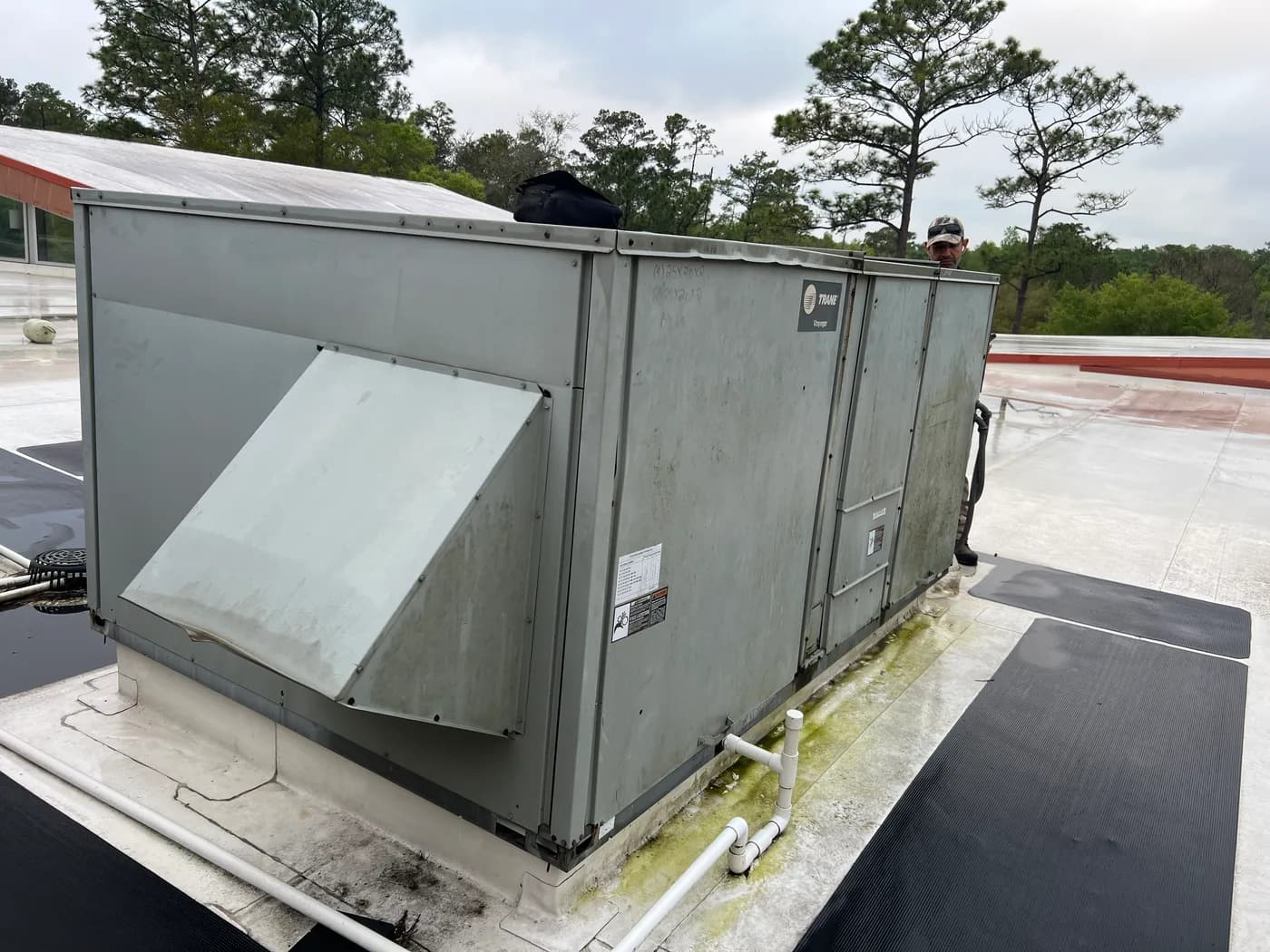
Scheduled inspection and operating review of a commercial packaged rooftop unit.
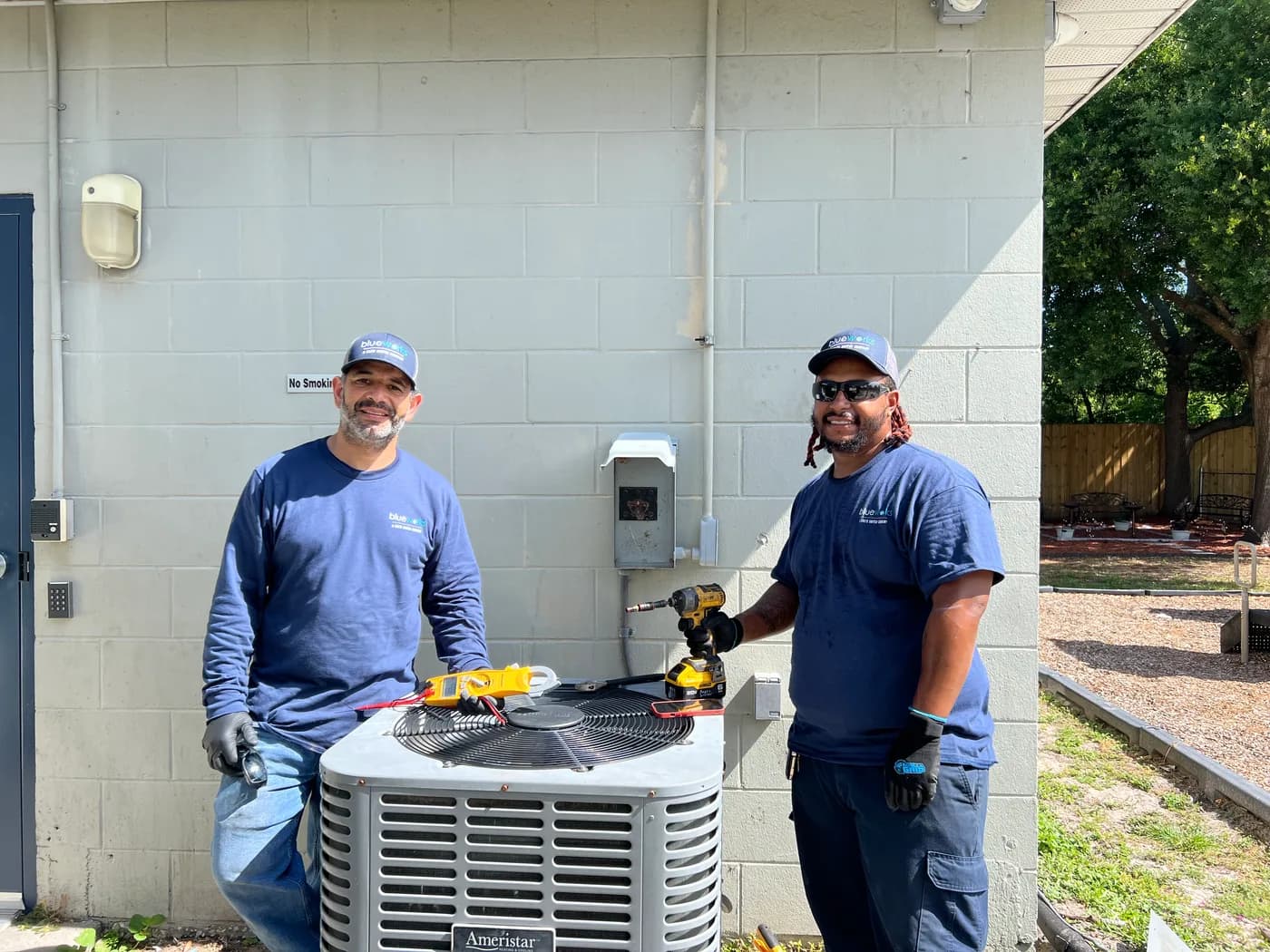
Testing of commercial HVAC electrical components, controls, voltage, and operating amperage.
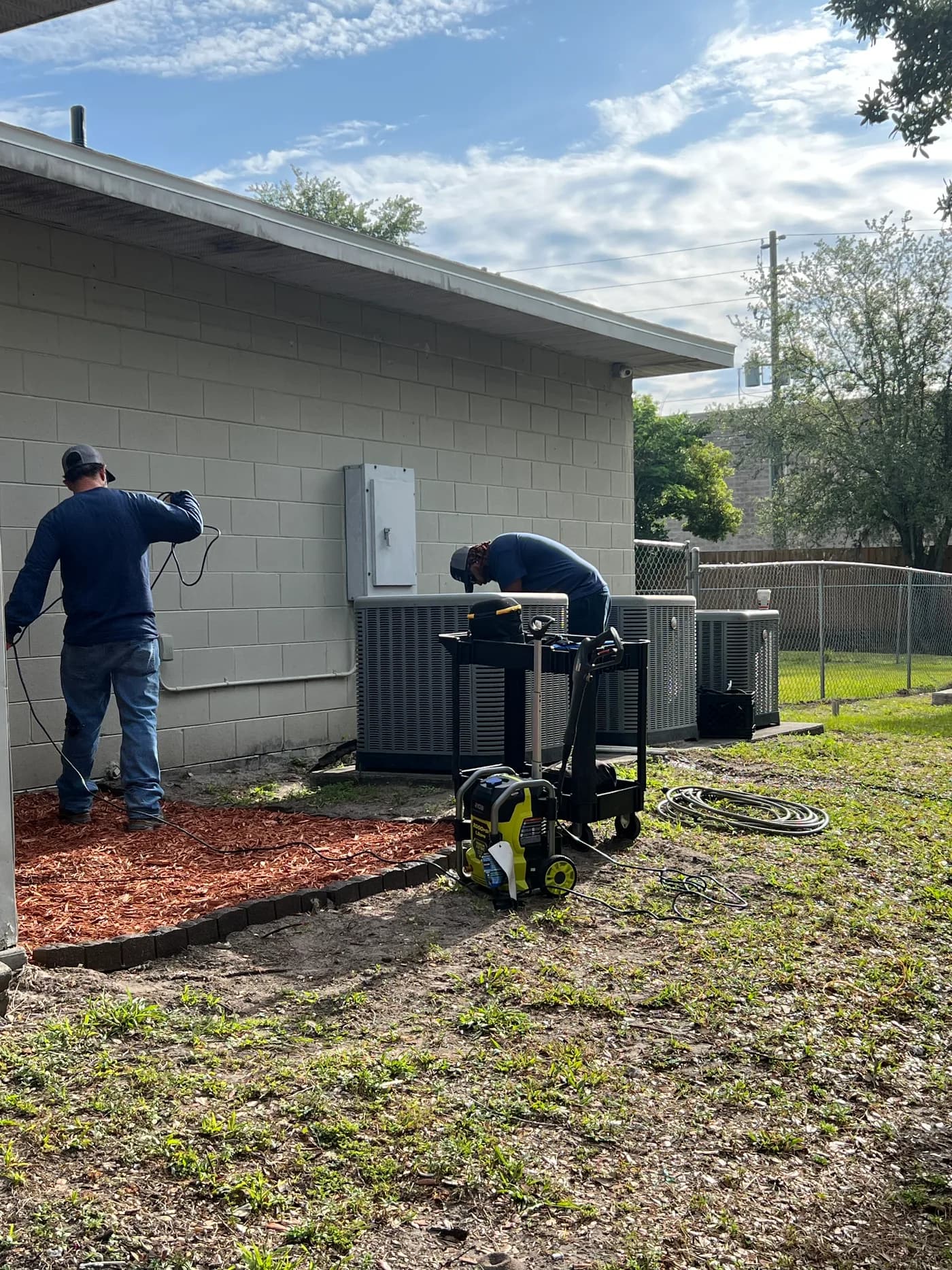
Inspection and service of the components that affect heat transfer, airflow, and equipment runtime.
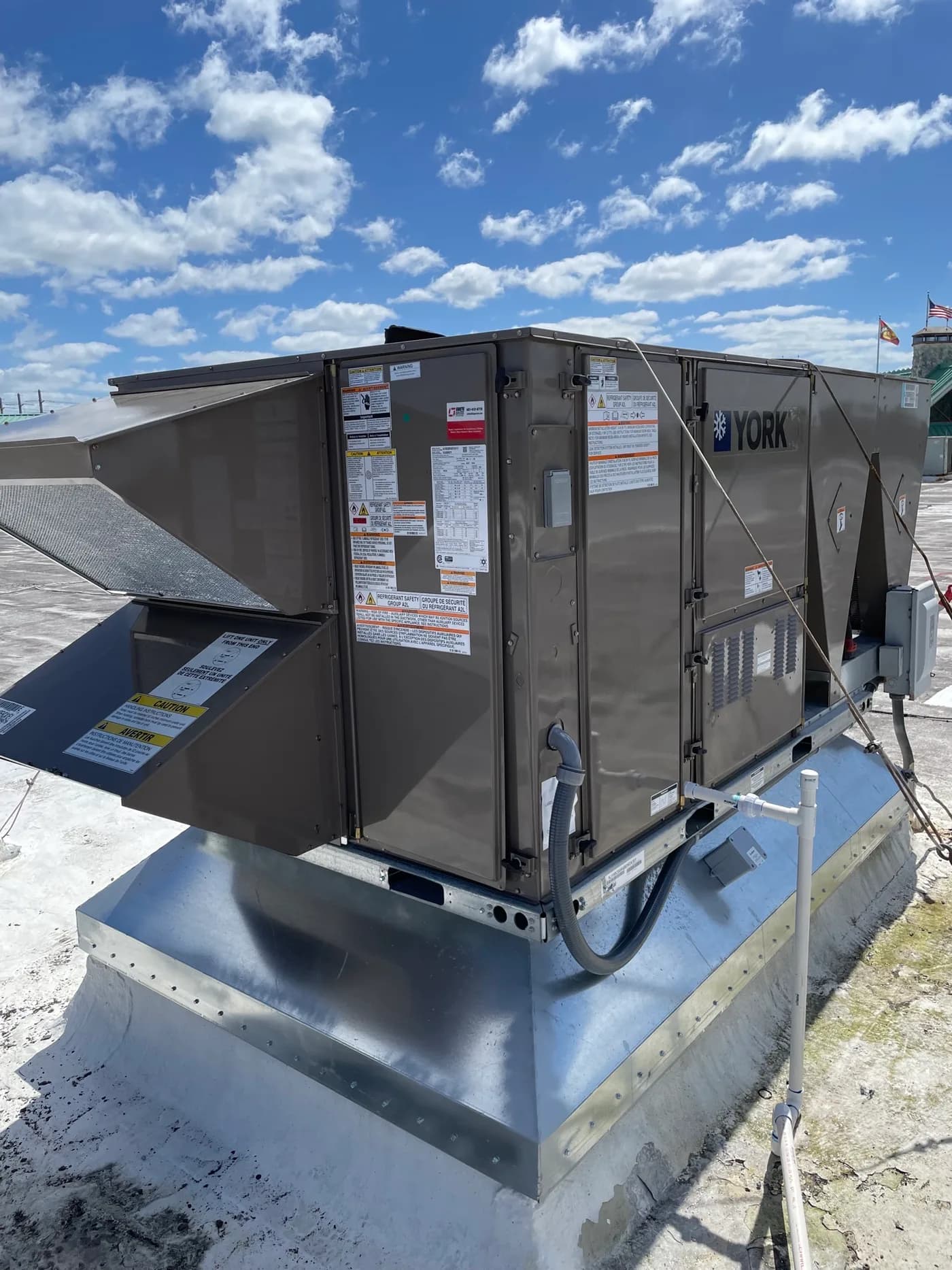
Field findings recorded for repair planning, equipment history, and future replacement decisions.
Preventive Maintenance for Commercial Facilities
We build commercial HVAC maintenance programs around the equipment, occupancy, operating schedule, and service requirements of the property.
Each facility has different access, scheduling, ventilation, operating, and documentation requirements. We account for those conditions when we develop the maintenance scope and recurring service schedule.
Commercial HVAC Equipment We Maintain
Packaged Rooftop Units
Single-zone, gas and electric, cooling-only, and heat pump rooftop systems serving commercial buildings.
Split and Packaged Systems
Commercial split systems, packaged equipment, and related indoor and outdoor components.
Ventilation and Make-Up Air Equipment
Equipment supporting outdoor air, exhaust, building pressure, and ventilation requirements.
Controls and Building Systems
Thermostats, sensors, economizers, control boards, and building automation connections associated with commercial HVAC operation.
Use Maintenance Records to Plan Repairs and Replacements
A consistent maintenance history gives your facility more information than a series of unrelated emergency invoices. Over time, the records can show which units require repeated repairs, which components are deteriorating, and which systems should be considered for capital replacement.
That information helps your team:
- Prioritize urgent equipment needs
- Plan repairs around operating schedules
- Compare recurring repair cost
- Identify equipment with declining performance
- Prepare annual maintenance budgets
- Support warranty records where applicable
- Plan replacement projects
- Reduce dependence on emergency service
- Coordinate work across multiple locations
Commercial HVAC Maintenance Agreement Questions
Build a Commercial HVAC Maintenance Program for Your Facility
Whether you manage one property, several rooftop units, or a portfolio of commercial locations, our team can review the equipment and develop a preventive maintenance program around your facility, operating schedule, and service priorities.
Commercial HVAC maintenance agreements for Orlando and Central Florida facilities.